
How the Web’s Past can Point to Web Design’s Future

Someone recently wrote to me where they were concerned about the future of web design as a profession. I’ve summarized the question as follows:

Given the rampant spread of website templates and point-and-click site builder tools (that more and more web hosts are offering) can web designers realistically expect to continue to make a good living building web sites for small business using traditional (from scratch) web design methods?

The answer to this question (and to find out clues on how to move forward) all we need to do is to look to web design’s past.

But before we go on, there is also something else to consider:

Web designers also have to deal with the reality that there are lots of kids out there willing to use pirated copies of Dreamweaver and Photoshop, to build a website for a fraction of what professionals have to charge.

Since (I’m guessing) most web design professionals don’t live with their parents anymore, it’s hard for them to compete with teenage nerds who just need XBox money.

How about the quality of the web design work - doesn’t that have an affect on who people will choose to build their website?

… Unfortunately, sometimes quality (for short sighted business owners) doesn’t fit into the equation. That said, there is good news for professional web designers. Read on …

A Little Personal History

I built my first website back in 1994 just as the Web was starting to get noticed by the general public. Funny, back in those days Web-nerds were worried that someday the Web might become a commercial place - how evil!

Since that time, I’ve watched how technology has had a huge impact on how people built websites and how technology set the stage, as far as what was considered a good website.

… Not to say they always got it right - many times they got it really wrong. Flash intros anyone?

The point to take away:

Bleeding edge technology points to the future skills that will be required of web designers. At the same time, you can also guess as to what skills will become marginalized, if not made totally obsolete.

Due to the dynamic nature of this business, it is safe to say that web designers will need to really pay attention to the trends if they want to stay in the game.

Web Design’s Stages of Evolution

From my perspective, I’ve seen the Web progress through four stages:

  1. Awful ugly
  2. Design aware
  3. Dynamic
  4. Standards aware and usability

AWFUL UGLY

In the early days of the Web (1994-98) we mostly had nerds and not designers building websites. And believe me, it wasn’t hard to tell:
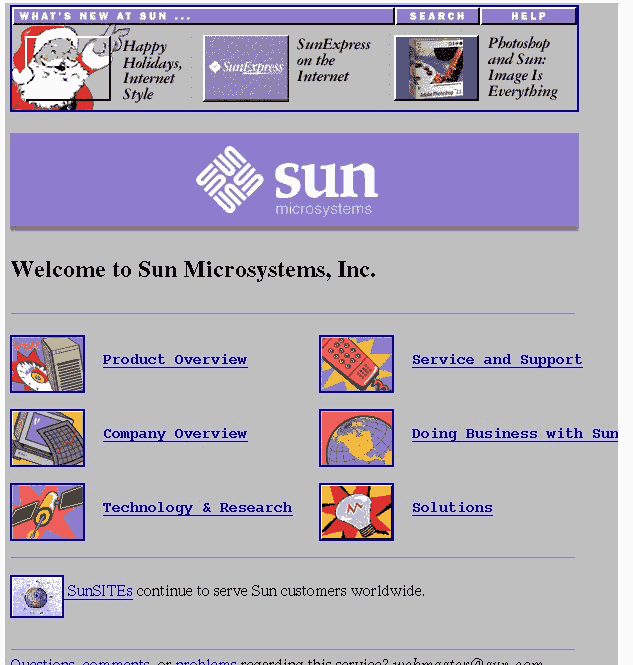
classic-web-94

The above screen-shot was typical of the web sites in those days. Actually, that was the cutting edge given that most of the Web consisted of text only pages.

I have to admit, I even contributed in to the early ugly Web with this beauty:
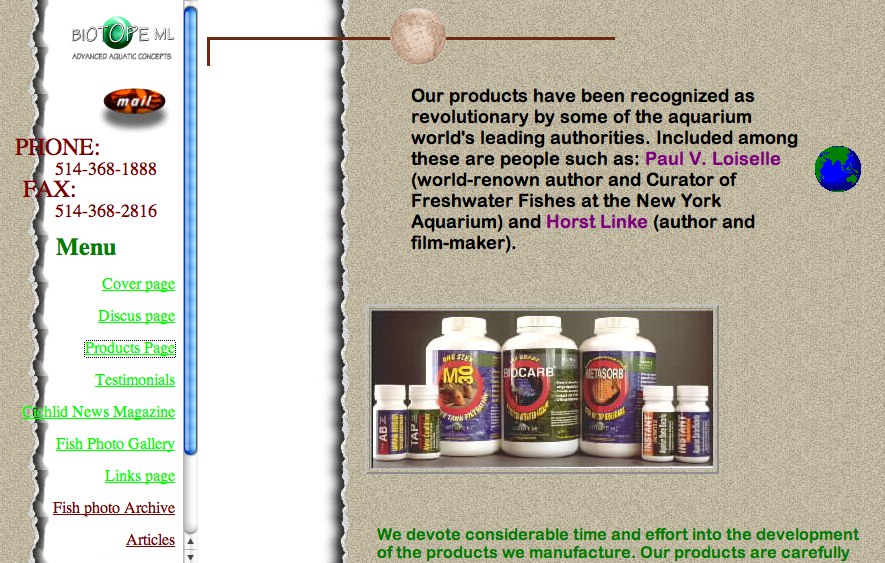
classic-web-98.jpg

In those days, if you knew basic HTML, you were a web designer.

DESIGN AWARE

Then sometime in the late nineties, graphic designers started looking at the Web and design consideration (aesthetics) started to have an impact. So the Web started to look good but things like usability, maintainability and marketability were non existent as far as most people were concerned.

With the realization that websites should look good, you soon needed to have some design ability to compete in the web design arena. Though, at that time, code quality was not an issue - these were the days of sliced images, font tags and nested tables. Heck, most web designers had very little understanding of HTML and CSS … if any at all!

THE DYNAMIC WEB

Some websites started becoming ‘web applications’ when CGI technology came about. First the stuff was written in C and soon PERL became the standard. In 1996, Microsoft came out with ASP and at the same time, other competing dynamic web page technologies like PHP and ColdFusion started to appear.

With the ‘dynamic Web’, the bar was raised yet again for web professionals. The elite web developer could create database driven websites but still, pure designers had plenty of work and were considered a different type of web professional.

STANDARDS AWARE AND USABILITY

In 2000 the Web Standards movement began to take shape and within a few years, clean code and usability became important qualities in web design.

Now for the first time, web design became a mature discipline (as far as I am concerned) because you had to have a deep knowledge of the Web, code and other macro issues related to a Web site:

  • Usability.
  • Search engine considerations - SEO.
  • Web site architecture for speed and maintainability.

Just being able to use Photoshop and a wysiwyg (Dreamweaver, Frontpage etc …) did not make you a competent web designer as it did in the past.

THE 5TH STAGE OF THE WEB’S DEVELOPMENT: WEB 2.0

Web 2.0 implies things like:

  • Blogs
  • RSS feeds
  • Social Networking
  • AJAX

I am not going to get into the details of all these things … I’ve covered them elsewhere and many of you probably know all about them.

The Web 2.0 phase/stage of the Web points to where web design as a profession is going. It tells you what you need to learn if you want to be a modern web designer.

In a nutshell:

You need to know more that HTML and CSS code; you need to learn the code that makes web sites dynamic, you need to learn the skills that allows you to build and work with Web 2.0 technologies.

That means you need to learn something like PHP, ASP or Ruby.

Why?

Modern websites need to go Web 2.0 if they want to compete. Many businesses should have a blog and many sites should promote using RSS and social networking tools. Websites should be made more usable with AJAX …

You as a web designer, will need to be able to offer these options to your clients. Otherwise, someone else will.

The good thing about this, is that the punk teenage kid who has a cracked copy of Dreamweaver, will have a much harder time getting the web design jobs.

… The skills required today to build an effective website, are far more complex than they used to be.

Stefan Mischook

www.killersites.com
www.killerphp.com

21 Responses to “How the Web’s Past can Point to Web Design’s Future”


  1. 1 Stef

    Stefan,
    Your sage advice on web-design future yet again is an example of why I am the president of your fan club. You alone have absolutely ‘nailed’ the truth in just about every topic you so generously provide. I wait for your input and latest newsletter every time. You never ever fail to inspire, educate, direct and calm my fears of where the heck I am going with all of this.

    Thank You Stefan

  2. 2 Mark York

    what is Ajax, and what is it used for? Do you buy it? Or is it just specific lines of code?

  3. 3 Stefan Mischook

    Mark,

    Ajax is a word nerds used to describe a bunch of technologies that work together to create web pages that work like desktop programs - no page refreshes to load new information into the page.

    This is stuff that is built into the browser and it is basically JavaScript sending and receiving messages to and from the server behind the scenes.

    For example: the commenting system on this blog uses AJAX … did notice how the comment gets posted to the page without reloading the entire page?

    Check out: http://www.killerajax.com/

    Hope that helps,

    Stefan

  4. 4 Neil pearce

    That’s really good advice and something that i needed to hear!
    I have been teaching myself web design using online tutorials and books for just over a year and i have gone completely dizzy on the amount of stuff you need to learn. My aim is to get employed as a web designer then go it alone once i have enough of a client base. But when you see what my potential employers are asking for…Photoshop, flash, html, css, javascript, ASP, PHP….the list is endless.
    So….i am going to concentrate on three or four areas which are…Flash , Photoshop, PHP/mySQL and Adobe flex.
    What do you reckon ????

  5. 5 Stefan Mischook

    Hi,

    I would go with PHP first. Then move into Flex or Flash.

    Photoshop is fine too, if you want to get into the design side of things. In reality, Photoshop is typically only a small part of the web design process.

    That said, it also depends on what type of work you like to do … are you a designer type or more of a builder?

    As far as the cash is concerned, unless you are a really talented designer, you are much better off getting into web programming - that means things like PHP, ASP.net etc …

    One last point:

    Pick one thing and learn it well. When you have practical working ability with that first thing (say PHP) move onto the next.Don’t make the mistake of trying to learn 3 things at the same time.

    … Unless you don’t mind taking forever to learn anything well enough to make money with it.

    -

    Don’t forget, I have hours of free beginners tutorials on PHP at http://www.killerphp.com.

    Stefan

  6. 6 AUGUSTO JOHN

    Stefan,
    I liked your article on the future of web design. But i would like to ask you few questions.Am new to web design. I just got some knowledge about how to use photoshop and dreamweaver but am not too good at it. But by virtue of what you said in this article, it appears being a web programmer is the next level as far as web designing is concern.
    Please what would be your position for someone like me who is a newcomer into the business and wants to live with web design as a career.
    In addition, i just laid my hand on a javascript textbook hoping to learn javascript as soon as possible.
    Also, is PHP more robust than ASP?
    Thanks.

  7. 7 Stefan Mischook

    Augusto,

    It is becoming increasingly difficult to compete in the web design arena if you are a pure designer.

    With the proliferation of web templates, you really need to be a great designer these days. But even if you are, I have found over the years, that many clients simply don’t have the eye for good design - they might not see the value in your superior talent.

    “it appears being a web programmer is the next level as far as web designing is concern.”

    Yes and no. I believe having basic programming knowledge is soon becoming the baseline for professional web designers.

    … Much in the same way that knowing CSS and HTML became core to web design only in 2001. Before that time, I would argue that the majority of web designers had very little understanding of code. But circumstances (web standards etc) forced web designers to go to the next level.

    ASP or PHP?

    Classic ASP (vs. ASP.NET) can’t hold a candle compared to PHP.

    ASP is an old technology that stopped developing in about 2000. Whereas PHP has been pushed forward to keep up with the times.

    Microsoft dropped classing ASP in favor of the new (and totally different) ASP.NET. Problem for many ASP’ers, is that ASP.NET is a hard thing to learn comparatively.

    I believe many ASP programmers jumped into the PHP camp because it was easier to pick up than ASP.NET.

    All that said, learn PHP!

    www.killerphp.com

    Stefan

  8. 8 Kaitar

    Stephen,

    I am wondering if you could answer a few questions for me regarding web design as a career?

    I’m definitely not new to coding (I too was designing ugly websites back in 1994), however I have not done a ton of website design, and only one professionally (it happened to be for my uncle).

    I am thinking of changing fields to be a part of the website design community, and possibly work for myself. That being said, would you suggest a degree in Website Design? Do you feel that it could be self-taught well enough to bypass the degree?

    If you were looking at a degree program, or even learning the material by yourself, what would be your list of things that you would have to know to be successful???

    Thank you so much for your time!!!

    Kaitar

  9. 9 Stefan Mischook

    Kaitar,

    If you want to work on your own, or for a small business, a degree/diploma in web design is not important.

    If on the other hand you want to work for a large corporation, then you will need a bachelors degree along with some training in design/web design.

    In both cases, you need a good portfolio more than anything else - by far.

    The skills I would suggest:

    1. HTML
    2. CSS
    3. Basic Design / Photoshop (basic image editing)
    4. PHP

    Options 3 and 4 are interchangeable depending if you want to go more code centric vs. design focussed.

    Stefan

  10. 10 AUGUSTO JOHN

    Hi Stefan,
    Thanks for your reply. I think i now know where to go. But i said something about javascript which i equally want you to please comment on. What would javascript offer me and is it advisable to learn javascript before PHP because am just into it.
    In a nut shell, Please kindly highlight what i need to know in order for me to be able to build sites that are Web 2.0 compliant.
    Thanks so much Stefan. I really appreciate.

  11. 11 Stefan Mischook

    JavaScript is the heart of AJAX.

    … You need to know JavaScript for two key operations in an AJAX enabled web page:

    1. Communicate with the web server behind the scenes.
    2. Change (on the fly) what is being displayed in the web page.

    So yes, JavaScript needs to be picked up at some point.

    That said, I think that you should learn things in this order:

    1. HTML
    2. CSS
    3. PHP (check out www.killerphp.com)
    4. Javascript

    Hope that helps,

    Stefan

  12. 12 Drew

    Generally, I just code as I go and use what i need. Concentrating on any specific platform has never worked for me, since there are so many variables. I refuse to use cookie cutter templates, as they are uber generic (eg they suck) and as long as sessions register properly across multiple platforms and use the same database’s, that’s all I ask. I just stay far far away of anything .net or .asp That platform is one scary system full of mega holes. I purposely lean towards php, since it is a beautiful way to code and adding other systems into it is seamless if one is quite adept at it.

    My next project is building a php based niche social networking site in metal music. Not the run of the mill. Definitely not some myspace clone. And a whole lot lighter on load factors.

  13. 13 Josh

    Hi Stefan,

    I’m really new in webdesign stuff although I managed to make a static one using Frontpage. No knowledge in HTML and a very little understanding of CSS. I’m willing and want to go PHP, I just want to know about what Coldfusion is. Is it a visual PHP or is it similar? Should I go Coldfusion in lieu of PHP or should I do both?

  14. 14 Stefan Mischook

    Hi Josh,

    The first thing you need to learn is the basics, and that means HTML and some CSS. Check out: www.how-to-build-websites.com and csstutorial.net.

    Then you can look into programming. Personally I think PHP is the best way to go. Check out: killerphp.com

    Stefan

  15. 15 Robert

    Hi Stefan,

    I have really enjoyed your blog and am also concerned with website builders as I am a graphic designer and have designed a couple of sites and really enjoyed it. Following on from your comment “It is becoming increasingly difficult to compete in the web design arena if you are a pure designer” and you mention the need to learn PHP and other software to stay ahead of the game which is sound advice except I feel having learnt some HTML and CSS I am reluctant to learn PHP as:

    1/. I simply don’t enjoy programming like designing
    2/. PHP could be made obsolete (or close to obsolete) in a few years like you mentioned happened to ASP.
    3/. A designer who learns HTML, CSS and PHP will prob find themselves having to learn yet another new scripting language in a few years!
    4/. As most web site builders do all the HTML and CSS (and PHP?) work for you, it will surely take the need for people with the skills to use these coding scripts out of the equation in the future?

    As a graphic designer I am already expected to know Photoshop, Illustator, Quark/Indesign, Flash, Fireworks and Dreamweaver! I think Im starting to answer my own question but although the blue-chips will always have there own designers, if most small business head towards the site builders for convenience and cost is there really any future in an over-saturated web design market, with the competition from web builders? Or the use in spending hours learning say, PHP only for it to be either replaced by a new scripting language or web builders doing all the PHP work for clients? PS. Sorry for sounding so negative, just half thinking of a change in career as im concerned by the threat possed by site builders or the thought of having to learn yet another software program? ;-(

  16. 16 Stefan Mischook

    Hi Robert,

    Good questions. Let me try to answer.

    1/. I simply don’t enjoy programming like designing

    I am not suggesting you become a programmer. But having PHP skills will allow you to do things like modify a CMS (Drupal for example) or make changes to Wordpress … add to it etc.

    Once you know even a little PHP, things like installing PHP based applications (blogs, cms’, chats, forums) will be much easier for you.

    2/. PHP could be made obsolete (or close to obsolete) in a few years like you mentioned happened to ASP.

    Eventually it could. But based on my experience, this will not happen over the next 7-10 at least because one of PHP’s strengths is how nimble to community is. PHP keeps adapting.

    Besides, knowing PHP will make learning another language easy.

    3/. A designer who learns HTML, CSS and PHP will prob find themselves having to learn yet another new scripting language in a few years!

    Again, once you understand one programming language, learning another is easy.

    4/. As most web site builders do all the HTML and CSS (and PHP?) work for you, it will surely take the need for people with the skills to use these coding scripts out of the equation in the future?

    I am not sure if I understand this question.

    Final Comment:

    I am not suggesting you should stop doing design work. I am just saying that understanding basic PHP programming will make your life easier as a web designer, and will probably open you up to new opportunities.

    Stefan

  17. 17 Greg D

    Hi Stefan,

    That last paragraph nailed it. And for anyone who doesn’t get it, I was able to implement some basic php after reviewing a couple of videos from http://www.killerphp.com a few months back.

    Stef, you make this stuff so easy. What a great contributor to the community you are. Anyway, after more than 10 years working in a government job, I’m half a dozen projects into my leap of faith into the web developer arena. Knowing just a little php has saved me countless hours… imagine changing html/css navigation on a simple 30 page website - with php that’s only 1 text file, not 30 pages.

  18. 18 Robert

    Hi Stefan,

    Thanks for the answers. I will try and rephrase question four as it was the one I would most value your opinion on. “4/. As most web site builders do all the HTML and CSS (and PHP?) work for you, it will surely take the need for people with the skills to use these coding scripts out of the equation in the future?” When I said web site builders I was refering to web hosting companies that offer pre-designed templates.. hope the question is clear now…

    Also apart from the sites offering pre-built web templates I read recently about a threat of design services and computer programming services been offshored to countries such as India. Please see
    http://www.careerplanner.com/Career-Articles/Hot_Jobs.htm or http://www.evalueserve.com/Media-And-Reports/WhitePapers/EVSArticleonPersontoPersonOffshoring.pdf.
    for the full article (in particular paragraphs 5,7 & 8)… Any thoughts anyone?

  19. 19 Stefan Mischook

    From my experience, there will always be need for customizations … even with turn-key web templates.

    Offshoring affects mainly larger corporate settings, small and medium sized business typically rather work with local (in country) people and firms.

    Besides, with the rising middle class in China and India, I think these advantages will slowly fade.

  20. 20 Mike

    Rather new to this blog, although a good read! The web design professional is seemingly over run with outsourced companies however in all honesty i still see a great number of individuals and supposedly good web design companies that still lack the inability to keep up with the latest design technology; it amazes me the number of people who still design layouts using tables!!!

  21. 21 Stefan Mischook

    Hi Mike,

    I see that too.

    The next step though (to keep ahead of the pack) is to learn PHP, CMS, and blogs in your web design process.

    Stefan

Comments are currently closed.